





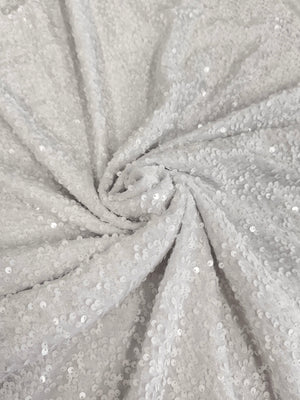

What Is Lace? The Complete Lace Fabric Guide
What Is Lace?
Lace is a decorative openwork fabric built from thread or yarn arranged in patterns of open holes, made either by hand or by machine. Unlike woven or knit cloth, most true lace is created without a pre-existing base fabric. The thread itself is looped, twisted, knotted, or stitched into a design, and the gaps between those threads are the point. That net-like structure is what gives lace its delicacy, its transparency, and its unmistakable ornamental look.

This is what sets lace apart from almost every other textile. Satin and chiffon are defined by how yarns are woven. Lace is defined by the open pattern the thread forms and the technique used to form it. The fiber is secondary.
The word itself hints at the structure. "Lace" comes from the Old French las, meaning a noose or cord, which traces back to the Latin laqueus for noose, a nod to the looped, interlaced threads that give lace its form.
A short history
Lace as we know it emerged in Europe in the late fifteenth and early sixteenth centuries, with Italy and Flanders (modern Belgium) as the earliest centers. Venice became famous for needle lace used in clerical vestments and the elaborate collars of the aristocracy, while Flemish artisans perfected bobbin lace. For centuries lace was entirely handmade, slow to produce, and extraordinarily expensive, which made it a marker of wealth and status. Machine lace arrived in the nineteenth century and brought the price down sharply, and by the 1840s lace was back in wide fashion. Today it survives mostly as a decorative accent rather than a whole-garment fabric, though it still defines bridal and eveningwear.

What Lace Is Made Of
Lace can be made from almost any thread, and the material shapes both its feel and its price.
-
Cotton is the most common fiber for lace today. It is stable, washable, and affordable, which suits eyelet, Cluny, and crochet styles.
-
Silk gives the finest, most luxurious drape and appears in high-end bridal and couture lace.
-
Linen was one of the traditional fibers alongside silk in early European lace.
-
Synthetics like nylon, polyester, and rayon make lace inexpensive and durable, and dominate mass-market production.
-
Metallic threads (historically gold and silver) added opulence to ceremonial and formal lace.
-
Elastic fibers such as spandex or Lycra turn lace into stretch lace for lingerie and fitted garments.
How Lace Is Made
Lace is grouped by the technique used to create it, and those techniques fall into two broad camps: handmade and machine-made.

Handmade lace
-
Needle lace is built stitch by stitch with a single needle and thread on a temporary backing that is later removed. It is the most intricate and expensive form, and it includes Alençon and Point de Venise.
-
Bobbin lace, also called pillow lace, is made by braiding and twisting many threads wound on bobbins over a padded pillow, with pins holding the pattern in place.
-
Crochet and tatting build lace from loops and knots using a hook or shuttle.
-
Cutwork and filet start from an existing fabric and remove or fill areas to create the openwork, which is why they sit slightly outside the strict definition.
Machine-made lace
-
Leavers lace, developed in the early nineteenth century, mimics fine handmade lace with remarkable detail.
-
Raschel lace is warp-knitted on a machine, which makes it versatile and affordable.
-
Schiffli or chemical lace is embroidered onto a backing fabric that later dissolves, leaving only the stitched motifs. This is how guipure lace gets its structure.
How to tell handmade from machine lace
There is a quick test that most guides skip. Look closely at a repeated motif across the piece. Handmade lace carries tiny irregularities, since no two hand-stitched flowers are truly identical. Machine lace shows near-perfect uniformity from one motif to the next. If every repeat is flawless and identical, it came off a machine. If the repeats vary slightly, you are likely holding handmade lace, which also explains a much higher price.
Types of Lace Fabric
There are dozens of lace types, but a handful cover most of what you will actually shop for. The fastest way to sort them is by base structure: mesh-backed laces sit on a fine net ground, while free-standing laces have no background and connect their motifs with bars.

|
Type of lace |
Structure and character |
Best for |
|---|---|---|
|
Fine net ground, delicate scattered florals, scalloped edges, soft drape |
Overlays, sleeves, veils, romantic gowns |
|
|
Alençon |
Needle lace with corded, outlined motifs on net, structured and dimensional |
Appliqués, borders, structured bridal gowns |
|
No net background, bold motifs joined by bars, heavy and structured |
Fitted gowns, tops, graphic appliqués |
|
|
Eyelet (broderie anglaise) |
Holes punched in fabric, reinforced with embroidery, substantial between holes |
Summer dresses, children's wear, casual pieces |
|
Cluny |
Sturdy cotton bobbin-style with geometric and wheel motifs |
Trims, tablecloths, home decor, beginner sewing |
|
Looped by hook, textured and casual |
Trims, boho apparel, home accents |
|
|
Point d'esprit |
Net dotted with small woven spots |
Veils, all-over romantic overlays |
|
Schiffli |
Machine-embroidered lace, lightweight |
All-over overlays, tiers |
|
Stretch lace |
Lace blended with spandex or Lycra |
Lingerie, fitted sleeves, dancewear |
|
Heavier lace with crystals, pearls, or sequins |
Formal gowns, statement bodices |
The most useful contrast to hold onto is Chantilly versus guipure. Chantilly is soft, sheer, and flowing for romantic overlays. Guipure is dense, bold, and structured for modern, graphic designs. Nearly every lace decision starts there.
Lace Characteristics: Pros and Cons
Lace is beautiful and distinctive, but it asks for careful handling in return.
What lace does well
-
Adds instant elegance and texture that flat fabrics cannot match.
-
Breathes well, since the open, net-like structure lets air pass through, which makes cotton laces comfortable in summer.
-
Ranges widely in weight and mood, from featherlight Chantilly to sculptural guipure.
-
Layers beautifully over other fabrics as an overlay, revealing color and skin through the openwork.
-
Takes appliqué and beadwork readily for custom detail.
Where lace falls short
-
Snags and tears easily because of the exposed threads and open construction.
-
Is sheer, so most lace garments need a lining or underlayer.
-
Frays at cut edges and needs careful finishing.
-
Can be expensive, especially handmade needle laces.
-
Requires gentle cleaning, since rough washing distorts the pattern.
Lace Fabric Uses

Lace is rarely the whole garment. Its strength is as an accent, and lace fabric uses cluster around a few areas:
-
Bridalwear: gowns, bodices, sleeves, veils, boleros, and gloves.
-
Eveningwear: overlays, panels, and appliqués on formal dresses.
-
Lingerie and loungewear: trims and panels, often in stretch lace.
-
Apparel details: collars, cuffs, yokes, and sheer sleeve inserts.
-
Trims and appliqués: edging and motifs applied to other fabrics.
-
Home decor: tablecloths, doilies, runners, curtains, and cushion accents.
Is Lace Good for Dresses?
Yes, and it is one of the defining fabrics of bridal and eveningwear, but the type of lace decides the result. Match the lace to the silhouette:
-
For soft, romantic overlays and sleeves, choose Chantilly or Schiffli, which float over a base without adding bulk.
-
For structured, fitted gowns, choose guipure or Alençon appliqués, which hold their shape and add dimension.
-
For summer or boho styles, choose eyelet, which is breathable, washable, and relaxed.
-
For fitted or stretch pieces, choose stretch lace so the fabric moves with the body.
Two rules make lace dresses work. First, line them. Lace is transparent, so a satin or chiffon lining underneath sets the color and provides coverage. Second, cut with the motifs in mind, placing the main flowers or patterns where they read best rather than cutting straight through them.
How to Choose the Right Lace
Start with the project, then weigh skill level and budget.
|
Your project |
Reach for |
Why |
|---|---|---|
|
Romantic bridal overlay |
Chantilly |
Fine, sheer, flowing |
|
Structured wedding gown |
Guipure or Alençon |
Holds shape, adds dimension |
|
Summer or casual dress |
Eyelet |
Breathable, washable, sturdy |
|
Lingerie or fitted sleeves |
Stretch lace |
Moves with the body |
|
Trims and home decor |
Cluny or crochet |
Durable and affordable |
|
First lace sewing project |
Cotton Cluny or eyelet |
Stable, has body, feeds through a machine easily |
On cost, expect a wide range. Cotton laces like eyelet, Cluny, and crochet are the most affordable and the friendliest to sew. Machine versions of fine laces are reasonably priced. Authentic handmade needle lace such as Alençon can run into the hundreds of dollars per yard, since each piece takes weeks or months to produce. Order swatches before committing to yardage so you can judge weight, transparency, and hand in person.
How to Care for Lace
Lace care depends entirely on the fiber and how the lace was made, so check the label first and match your method to the type.
For delicate, fine, or bridal lace, favor dry cleaning or gentle hand washing. Use cool water, ideally no warmer than about 30°C (86°F), with a gentle or silk detergent, and never rub or wring. Press water out gently and dry the piece flat on a clean white towel, away from direct sunlight.

For sturdy cotton laces (eyelet, Cluny, crochet) and stretch lace, a gentle machine cycle in a mesh laundry bag is usually safe. Skip bleach and fabric softener, both of which damage the fibers.
For storage, wrap lace in acid-free tissue paper or unbleached muslin. Avoid plastic bags, which trap moisture and can yellow the lace over time.
Quick lace care checklist
-
Check the label and identify the fiber before washing
-
Dry clean or hand wash fine and bridal lace in cool water
-
Machine wash cotton and stretch lace gently, in a mesh bag
-
No bleach, no fabric softener, no wringing
-
Dry flat on a white towel, out of sunlight
-
Store in acid-free tissue or muslin, never plastic
Common Mistakes to Avoid
-
Skipping the lining. Single-layer lace is sheer and needs a backing for most garments.
-
Ignoring motif placement. Cutting straight through the pattern wastes the design and looks unbalanced.
-
Choosing the wrong weight. Delicate Chantilly will not hold a structured shape, and heavy guipure will not float as an overlay.
-
Washing fine lace roughly. Hot water, wringing, and machine agitation distort the pattern.
-
Storing lace in plastic. Trapped moisture causes yellowing and mildew.
-
Starting with the hardest lace. Beginners who begin with stretch or fine Chantilly often struggle. Cotton Cluny and eyelet are far more forgiving.
Expert Tips
-
Buy a little extra yardage, since lace frays and motif placement wastes some fabric.
-
Stabilize slippery lace with tissue paper or a lightweight interfacing when cutting and sewing.
-
Finish edges with a fine zigzag, appliqué, or a lace-to-lace seam to hide raw threads.
-
Match the lining color to the effect you want. A nude lining lets the pattern read on the skin, while a contrasting lining makes the motifs pop.
-
Test any cleaning method on a hidden corner first, especially with vintage or handmade lace.
Conclusion
Lace is not defined by a fiber or a weave. It is defined by openwork, thread formed into a pattern of deliberate holes, made by hand or by machine, and that is what gives it a look no solid fabric can imitate. Once you know the difference between a mesh-backed lace like Chantilly and a free-standing lace like guipure, and you understand how the fiber and construction affect weight, price, and care, choosing the right lace becomes straightforward.
Ready to work with it? Explore our lace collection to compare Chantilly, guipure, eyelet, and more, and order swatches so you can feel the weight and see the openwork before you commit.
FAQ
What is lace fabric in simple terms?
Lace is a delicate, decorative fabric made of thread arranged in patterns of open holes. Instead of being woven solid, the thread is looped, twisted, or stitched into a net-like design, which gives lace its transparent, ornamental look.
What is lace made of?
Lace can be made from almost any thread. Cotton is the most common today, followed by silk, linen, and synthetics like nylon, polyester, and rayon. Stretch lace adds spandex, and historical lace sometimes used gold or silver thread.
Is lace handmade or machine made?
Both. Traditional lace is handmade using needle or bobbin techniques, which is slow and expensive. Most modern lace is machine made on Leavers, Raschel, or Schiffli machines, which is faster and far more affordable.
What are the main types of lace?
The most common are Chantilly, Alençon, guipure (Venise), eyelet, Cluny, crochet, point d'esprit, Schiffli, and stretch lace. They differ mainly by whether they sit on a net ground or stand free, and by weight and fiber.
What is the difference between Chantilly and guipure lace?
The base. Chantilly has a fine net ground with delicate florals, so it is soft, sheer, and flowing. Guipure has no net background and connects its motifs with bars, so it is heavier, bolder, and more structured.
Is lace good for dresses?
Yes. Lace is a staple of bridal and eveningwear. Use Chantilly for soft overlays, guipure or Alençon for structured gowns, and eyelet for summer styles. Because lace is sheer, dresses are almost always lined.
What is the difference between lace and eyelet?
Eyelet is a type of lace made by punching holes into fabric and reinforcing them with embroidery, so the fabric between the holes stays solid. It is sturdier, more washable, and more casual than fine net laces like Chantilly.
Is lace breathable and good for summer?
Cotton lace is breathable thanks to its open structure, which makes eyelet and similar styles comfortable in warm weather. Synthetic laces breathe less but are lighter and cheaper.
Why is some lace so expensive?
Handmade needle laces like Alençon can take weeks or months to produce by hand, which pushes prices into the hundreds of dollars per yard. Machine-made versions of the same designs cost a fraction as much.
How do you wash lace without ruining it?
Check the fiber first. Hand wash or dry clean fine and bridal lace in cool water with gentle detergent, never wringing. Cotton and stretch lace can go in a mesh bag on a gentle machine cycle. Dry flat, away from sunlight, and store in acid-free tissue.




Leave a comment