





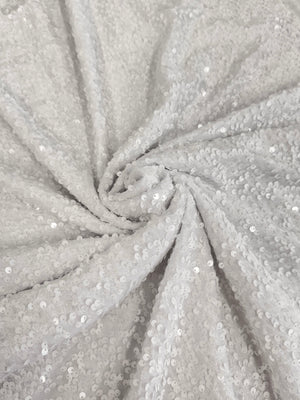

How to Cut Velvet Without Slipping or Shifting
To cut velvet fabric without slipping or shifting, lay it face down in a single layer on a flat, non-slip surface, hold it in place with pattern weights instead of pins, and cut with sharp fabric shears or a rotary cutter, with every pattern piece facing the same nap direction.
Velvet slips because its soft pile acts like a layer of tiny rollers. When two velvet surfaces touch, or velvet sits on a smooth table, the fabric creeps as soon as you start cutting. The fix is to control the surface, the layers and the tools.
The soft, directional pile that makes velvet so hard to cut is the same feature explained in the complete guide to velvet fabric. This guide focuses on one step: getting clean, accurate cuts every time.
How to Prepare Velvet Fabric Before Cutting
Prepare velvet by checking the care label, relaxing the fabric and marking the nap before you place any pattern pieces.
- Pre-treat only if the finished piece will be washed. Washable velvets, like many polyester stretch velvets, can be washed the same way you’ll wash the finished item. Dry-clean-only velvet should not be pre-washed.
- Let it relax. Unroll velvet and leave it flat for a few hours so it settles to its natural shape.
- Steam out creases from the wrong side. Never press velvet flat on the right side.
- Find the nap direction. Stroke the fabric: smooth is with the nap, rough is against it. Chalk arrows on the wrong side.
- Straighten one end so the fabric sits square to the selvage.
Essential Fabric Cutting Tools for Cutting Velvet Accurately
The right fabric cutting tools stop velvet slippage before it starts:
- Fabric cutting scissors: Sharp dressmaker shears, ideally bent-handle so the fabric stays flat while you cut.
- Rotary fabric cutter: A 45 mm blade handles most velvets, with a fresh blade for each big project.
- Self-healing cutting mat: Protects your table and grips the fabric slightly.
- Fabric weights: Pattern weights, or clean tins and washers, hold velvet without pinning holes.
- Clear quilting ruler: For straight fabric cutting with a rotary cutter.
- Tailor’s chalk or a fabric marker: For marking nap arrows and cutting lines on the wrong side.
- Lint roller: To pick up loose pile after cutting.
The Utah State University Extension guide to basic sewing supplies recommends dressmaker shears with sharp blades and notes that a rotary cutter’s blade should be held straight to avoid damaging the mat.

How to Cut Velvet Fabric Without Slipping or Shifting
Cut velvet in a single layer, face down, with weights holding the pattern in place.
- Lay the fabric face down: So, the pile grips the cutting surface and the smooth backing faces up.
- Use single-layer cutting: Folded velvet slides on itself. Trace a second copy of pieces you need twice, or flip the pattern for mirror pieces.
- Place every piece in the same nap direction: Following the with-nap layout on your pattern.
- Weight, don’t pin: Pins can shift the pile and leave marks. If you must pin, pin only within the seam allowance.
- Cut with long, steady strokes: Keeping the lower blade on the table so the fabric doesn’t lift.
How to Cut Fabric Straight and Maintain Accurate Measurements
To cut fabric straight, square the fabric to the selvage, measure from the selvage edge, and cut along a ruler rather than freehand.
- Line up the selvage: With the edge of your cutting mat grid.
- Use the grainline arrow: Measure from each end of the arrow to the selvage so both points match.
- Mark before cutting: Draw the line on the wrong side with chalk.
- Hold the ruler firmly: With your hand flat and fingers away from the edge.
- Measure twice; Velvet pile can hide markings, so check measurements before every cut.
How to Cut Velvet With Scissors vs. a Rotary Cutter
Both tools work well for velvet. The best choice depends on the shape you’re cutting.
|
|
Fabric scissors |
Rotary cutter |
|
Best for |
Curves, notches, small pieces |
Straight lines, strips, large panels |
|
Fabric movement |
Lifts fabric slightly |
Fabric stays flat |
|
Accuracy |
Good with practice |
Very high with a ruler |
|
Extra tools needed |
None |
Cutting mat and ruler |
|
Stretch velvet |
Can stretch edges if fabric lifts |
Cleaner edges on knits |
For four-way stretch velvet in polyester and spandex, a rotary cutter is often the better choice because the fabric stays flat and doesn’t stretch as you cut.

How to Cut Velvet Upholstery Fabric for Larger Projects
To cut velvet upholstery fabric, plan every panel on paper first, mark the nap on each one, and cut on a large, flat surface such as a clean floor covered with a sheet.
- Make a cutting plan that lists each panel, its size and its nap direction.
- Keep nap consistent. A common upholstery convention is to run the pile down on backs and arms and toward the front edge on seat cushions.
- Label every piece on the wrong side with its position and an arrow.
- Support the weight of large panels so they don’t drag and distort while cutting.
- Allow extra yardage for the with-nap layout and any pattern matching.
For large curtains or furniture throws, ordering all the yardage from a velvet fabric collection sold by the yard at the same time helps keep the color consistent across every panel.
Tips for Sewing Velvet Without Slipping or Shifting
The same grip-and-control approach carries through to sewing:
- Use a walking foot so both layers feed evenly.
- Hand-baste or clip seams before machine sewing.
- Sew in the direction of the nap.
- Lower the presser foot pressure if your machine allows it.
- For stretch velvet, use a stretch needle and a narrow zigzag or serger.
FAQs
Should velvet fabric be washed before cutting?
Only if the finished item will be washed and the care label allows it. Washing first prevents shrinkage later. Dry-clean-only velvets shouldn’t be pre-washed.
Is it better to cut velvet fabric face up or face down?
Face down. The pile grips the surface underneath, which stops slipping, and you can mark the smooth backing easily.
How do you keep velvet fabric from moving while cutting?
Cut in a single layer on a cutting mat or non-slip surface, use pattern weights instead of pins, and use long, steady cutting strokes.
Can you use regular fabric scissors to cut velvet?
Yes, as long as they’re sharp dressmaker shears used only for fabric. Dull scissors chew the pile and leave ragged edges.
What is the best surface for cutting velvet fabric?
A large self-healing cutting mat is best. A flat table covered with a cotton sheet or flannel also works, because it adds grip.
Should velvet be cut one layer at a time?
Yes. Single-layer cutting stops velvet layers sliding against each other and keeps nap direction consistent.
How do you prevent raw velvet edges from fraying after cutting?
Finish woven velvet edges with a serger, zigzag stitch or binding soon after cutting. Knit stretch velvet doesn’t fray, but it can shed pile, so shake out and lint-roll cut edges before sewing.



Leave a comment