




The Best Fabrics for Beginner Sewists
And Exactly What to Make With Them
Starting your sewing journey is exciting… and a little overwhelming. Between patterns, machines, and techniques, the last thing you want is a fabric that fights you every step of the way. The truth is, the fabric you choose can make or break your entire experience as a beginner. Choose the right one and sewing feels intuitive, satisfying, and fun. Choose the wrong one and even a simple project can feel like a battle you are not winning.
At Kiki Textiles, we have helped over 300,000 customers find their perfect fabric — from complete beginners to seasoned designers. Here are the five fabrics we recommend most often to new sewists, why they work so well, and exactly what you can create with them.
1. Cotton: The Classic Starting Point
There is a reason every sewing teacher recommends cotton to beginners and it is not just tradition. Cotton is one of the most forgiving, predictable, and universally easy fabrics to work with. It does not slip on your cutting table, it feeds through your machine cleanly and consistently, and it holds its shape beautifully through every step of the process. From cutting to pressing to finishing.
Cotton breathes naturally, washes beautifully, and comes in an enormous range of weights, textures, and prints. Our Cotton Gauze and Cotton Lawn collections are particularly popular with beginners because of how soft and manageable they are while still producing gorgeous finished pieces.
Why it is beginner friendly:
• Stable and easy to cut without shifting
• Feeds through the machine smoothly without slipping
• Seams press flat beautifully with an iron
• Widely available in beginner-friendly weights
• Easy to mark, pin, and handle
What to make:
• A flowy summer dress or sundress
• Tote bags and market bags
• Lightweight curtains or throw pillow covers for your home
• A simple button-down shirt or blouse
• Children's clothing and baby items
Shop our Cotton collection at Kiki Textiles →
2. Gabardine: The Fabric That Always Cooperates
If cotton is the classic recommendation, Gabardine is the secret weapon that not enough beginners know about and once you sew with it you will wonder how you ever went without it. Gabardine is a tightly woven twill fabric, and that twill weave is what makes it so exceptional for beginners. It is stable, it does not fray aggressively, and the seams press absolutely flat after a single pass with the iron — giving every finished piece that clean, polished look that can be hard to achieve with other fabrics.
It is also wrinkle resistant, which means your finished garments hold their shape and look professional all day long. The result is a fabric that makes beginner work look advanced which is exactly the kind of confidence boost every new sewist needs.
Why it is beginner friendly:
• Twill weave is naturally stable and forgiving
• Does not shift or move on the cutting table
• Seams lie completely flat after ironing
• Wrinkle resistant so finished pieces stay polished
• Clean modern finish on every garment type
What to make:
• Wide leg trousers or tailored pants
• A structured blazer or oversized jacket
• A pencil skirt or A-line midi skirt
• A matching co-ord set
• Table runners or structured home decor pieces
Shop our Gabardine collection at Kiki Textiles →
3. Linen: Effortless, Breathable, and Beautifully Forgiving
Linen has a reputation for being tricky to work with and while traditional 100% linen can be a little stiff and prone to fraying, a good quality linen blend is an entirely different experience. Linen is naturally breathable, gets softer with every wash, and has that effortlessly relaxed aesthetic that makes even the simplest silhouette look elevated and intentional.
The key for beginners is choosing a linen blend rather than a pure linen, the blend adds softness and stability that makes it significantly easier to cut, sew, and handle. At Kiki Textiles our linen collection includes blends that are soft, fluid, and genuinely beginner friendly while still delivering that beautiful natural texture and drape that linen is known for.
Why it is beginner friendly:
• Natural structure makes it easy to cut and handle
• Responds beautifully to pressing and ironing
• Forgiving with small sewing imperfections
• Stable enough for straight seams and clean finishes
• Gets softer and more beautiful with every wash
What to make:
• A breezy linen blouse or relaxed top
• Linen napkins, placemats, or a table runner
• A simple tote or market bag
• Wide leg beach trousers or a relaxed summer pant
• A linen duvet cover or pillowcases for the home
Shop our Linen collection at Kiki Textiles →
4. Poly Poplin: The Underrated All-Rounder
Poly Poplin does not always get the attention it deserves in beginner fabric conversations and that is a mistake we want to correct right now. Poly Poplin is a medium weight, tightly woven fabric with a smooth finish and just enough structure to make it incredibly easy to sew with. It holds its shape, cuts cleanly, and delivers a polished result that looks far more advanced than the skill level it requires.
As verified Kiki Textiles customer Cindy put it “This fabric is luscious and shipping was fast.” And she is right on both counts. Poly Poplin is smooth, slightly crisp, and works beautifully for everything from structured garments to home decor making it one of the most versatile fabrics a beginner can have in their stash.
Why it is beginner friendly:
• Medium weight gives it natural stability at the machine
• Smooth surface feeds evenly without catching or pulling
• Holds sharp creases and presses beautifully
• Minimal fraying makes seam finishing straightforward
• Works for both garments and home decor projects
What to make:
• A structured midi skirt or A-line dress
• Table covers, tablecloths, and event decor
• A classic button-down shirt
• Fabric headbands or hair accessories
• A lined tote bag with clean structured edges
Shop Poly Poplin at Kiki Textiles →
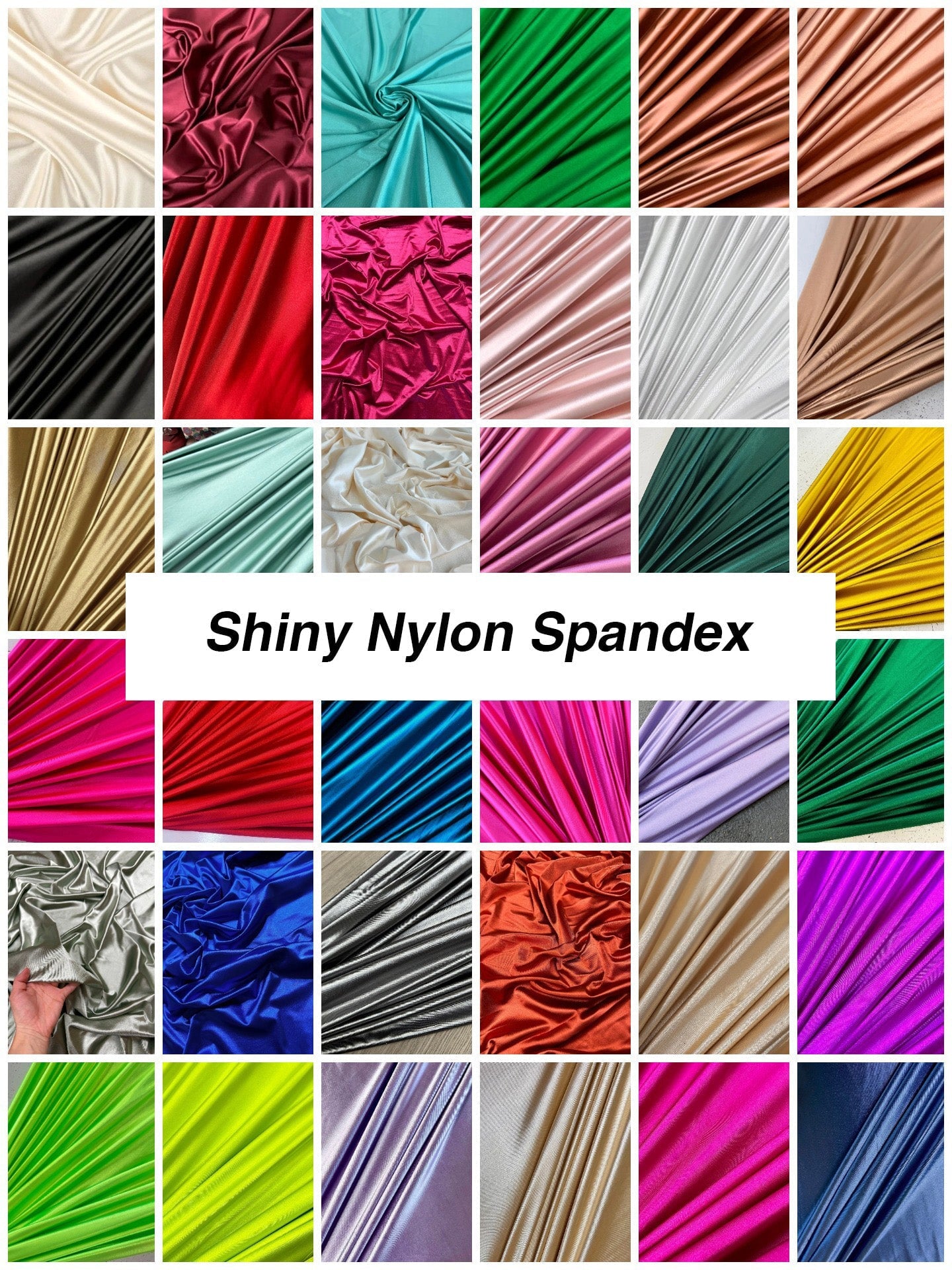
5. Shiny Nylon Spandex: The Beginner Friendly Stretch Fabric
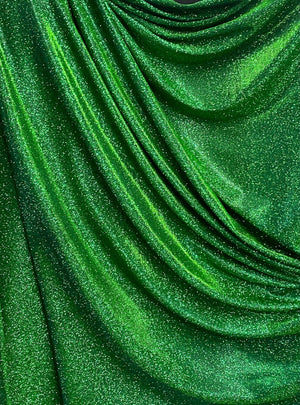
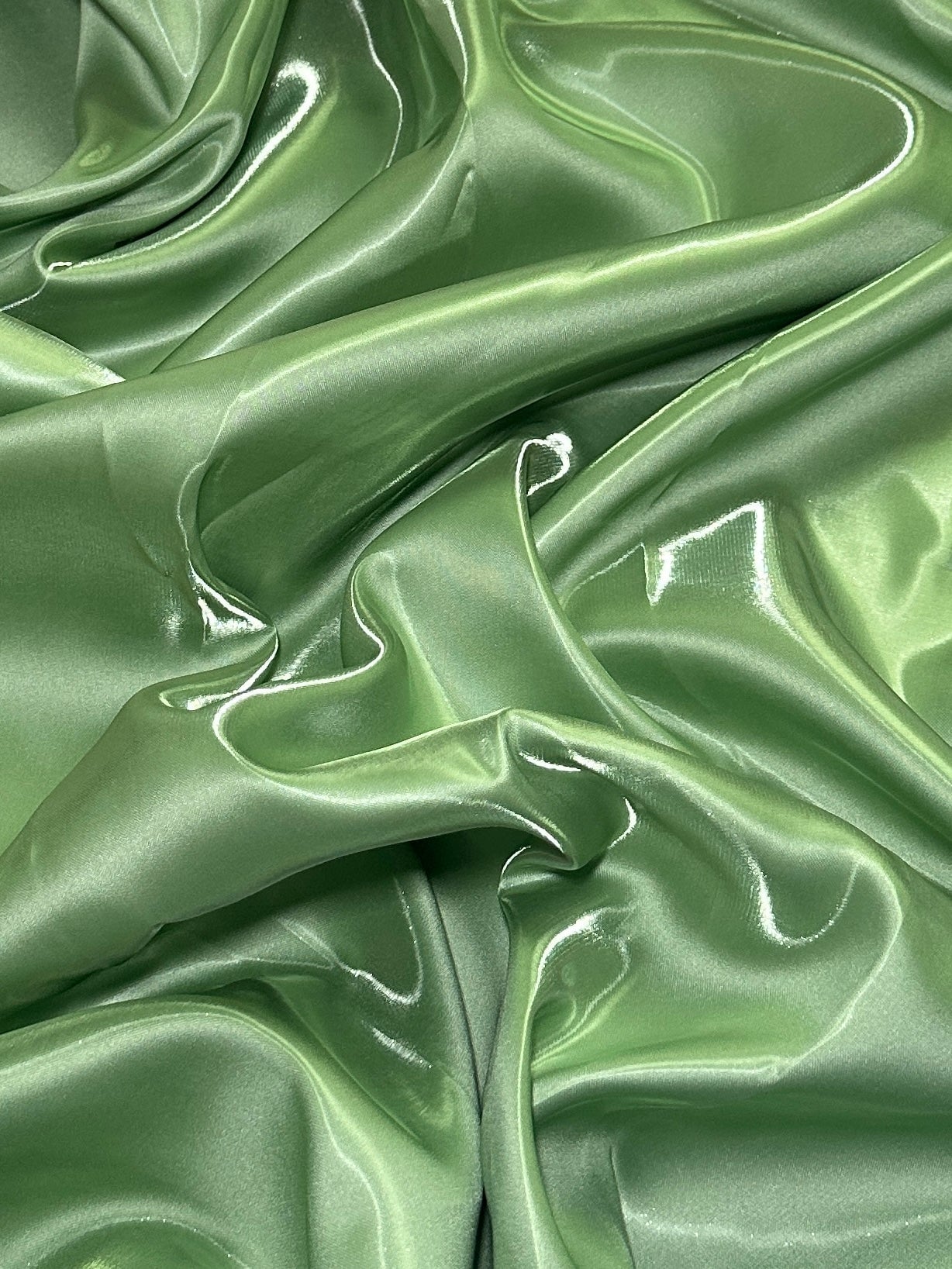
Stretch fabrics have a reputation for being difficult to sew and while that can be true with some fabrics, our Shiny Nylon Spandex is genuinely one of the most forgiving and enjoyable stretch fabrics a beginner can work with. The four-way stretch means it moves with you and forgives small fit errors naturally. The shiny finish makes every finished piece look polished and intentional. And the compression gives it just enough structure to hold its shape beautifully throughout the sewing process.
The silk-like shine of this spandex means your finished pieces look incredibly elevated most people cannot believe it is a spandex when they first see it. It is also one of our best-selling fabrics for a reason our customers love it for activewear, swimwear, dancewear, and fitted gowns, and beginners consistently tell us it was far easier to work with than they expected.
Why it is beginner friendly:
• Four-way stretch forgives fit imperfections naturally
• Feeds cleanly through the machine without skipping stitches
• Minimal fraying no need for complex seam finishing
• The stretch means less precision required for a great fit
• Compression gives it stability during the sewing process
What to make:
• A fitted bodysuit or one-piece swimsuit
• Leggings or bike shorts
• A fitted crop top or sports bra
• A dance costume or performance wear piece
• A sleek fitted mini dress
Shop our Shiny Nylon Spandex collection at Kiki Textiles →
Fabrics to Avoid as a Beginner
Not all fabric is created equal… and some fabrics have a steep learning curve that is genuinely better saved for when you have more experience under your belt. Here are the fabrics we recommend avoiding until you are more confident at the machine:
Slippery silks and charmeuse these fabrics shift constantly on the cutting table and require a level of precision tht is difficult to achieve when you are just starting out. They also fray heavily and are unforgiving with seam imperfections.
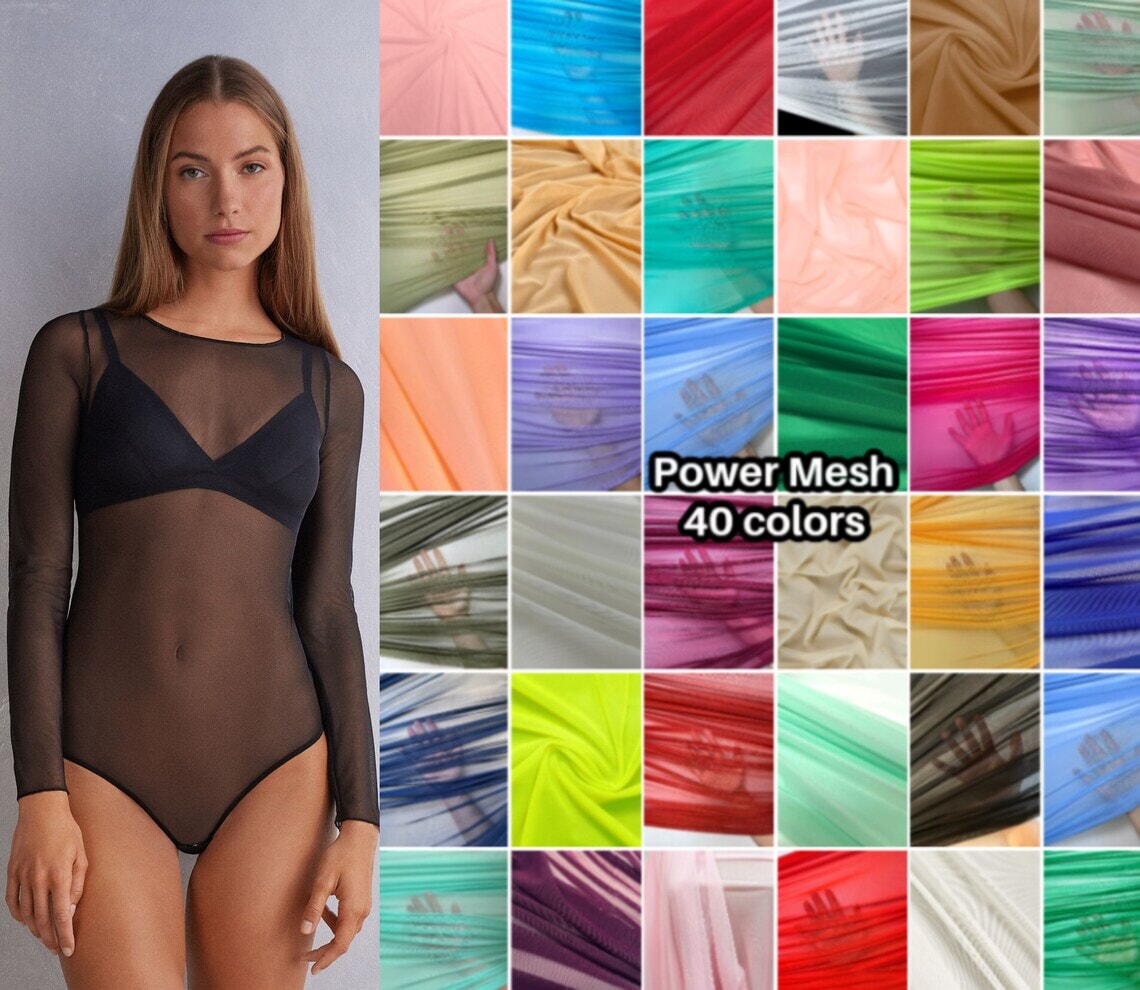
Chiffon and very sheer fabrics beautiful to look at but extremely challenging to cut and sew accurately. The slippery surface and sheer quality make every step of the process more difficult than it needs to be for a beginner.
Heavy brocade and jacquard the weight and structure of these fabrics can be hard to manage, and the pattern matching required to use them well is an advanced skill in itself.
100% pure linen unlike a linen blend, 100% pure linen can be quite stiff, frays aggressively, and requires more precise handling. Save pure linen for when you are more comfortable with fabric behavior.
Velvet beautiful but notoriously difficult. Velvet has a pile direction that affects cutting, sewing, and pressing in ways that require experience to navigate successfully.
Common Beginner Mistakes to Avoid
Beyond fabric choice, there are a few common mistakes that trip up new sewists regardless of what they are working with:
1. Skipping the prewash
most natural fabrics like cotton and linen will shrink when washed for the first time. Always prewash your fabric before cutting to avoid a finished piece that no longer fits.
2. Not pressing as you go
Ironing your seams after each step makes an enormous difference in the quality of your finished work. A well-pressed seam is the difference between something that looks homemade and something that looks professional.
3. Cutting on an unstable surface
Always cut on a flat, stable cutting mat. Cutting on the floor or on an uneven surface leads to inaccurate cuts and frustration down the line.
4. Using the wrong needle
Different fabrics require different needle types. Using the wrong needle is one of the most common causes of skipped stitches, broken threads, and damaged fabric. When in doubt, a universal size 80 needle works well for most beginner-friendly fabrics.
5. Rushing the process
Sewing rewards patience. Slow down, press as you go, and take the time to do each step properly. The results will always be better for it.
Starting your sewing journey with the right fabric is one of the best decisions you can make — and at Kiki Textiles we have everything you need to get started with confidence. With one day shipping, five free swatches with every order, and a collection curated by Project Runway finalist Victoria Cocieru, we are here to make your sewing experience as beautiful and enjoyable as possible from day one.




Leave a comment